K-12 Lead Generation for EdTech Sellers
K-12 lead generation is not just buying school email lists. Learn how to build a school district funnel around fit, contacts, buying signals, timing, and relationship nurture.
K-12 lead generation is different from normal B2B lead generation because the buyer is not one person and the timeline is not your quarter.
School districts buy through budget cycles, committees, procurement rules, board approvals, grants, pilots, and long relationship arcs. A lead is not just someone who opened an email. A lead is a district or school account where your product fits, the right person can be reached, and the timing is not hopeless.
The best K-12 lead generation system has five layers:
- Market definition.
- Contact data.
- Buying signals.
- Education-specific content.
- Relationship nurture.
K-12 Lead Generation Starts with Account Selection
Most teams start too broad. They want "all districts" or "all superintendents."
That creates noise.
Better K-12 lead generation starts with account segmentation:
- Which states have the strongest policy, funding, or procurement tailwinds?
- Which district sizes can actually afford the product?
- Which roles feel the pain most clearly?
- Which categories have active budget this year?
- Which schools or districts look like current customers?
For example, a professional development provider might target districts with new curriculum mandates, recent Title II-A funding, and a newly hired curriculum leader. A cybersecurity vendor might target districts with E-Rate activity, technology board agenda items, and a new CTO.
Same market. Different leads.
The Funnel: From Market to Meeting
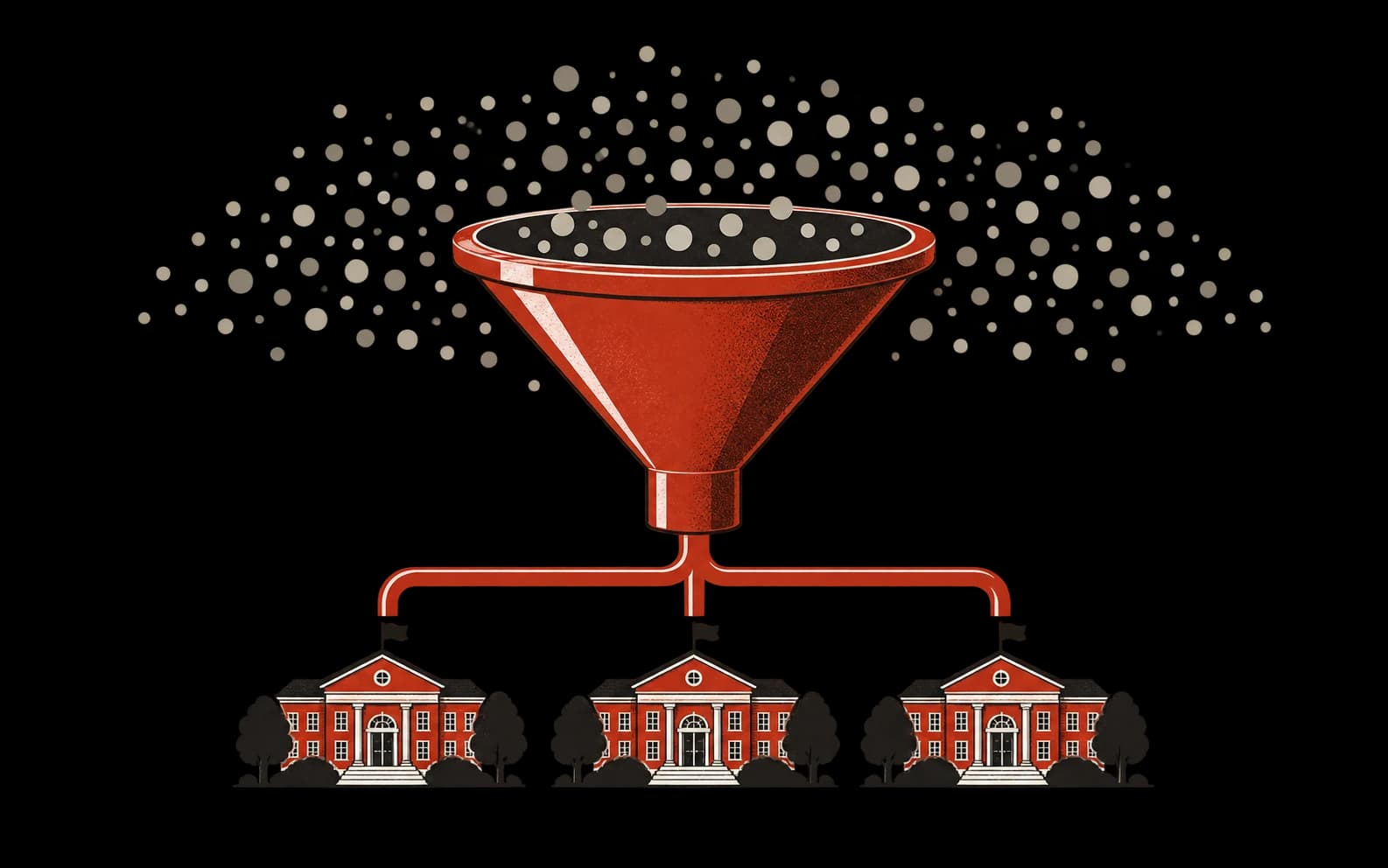
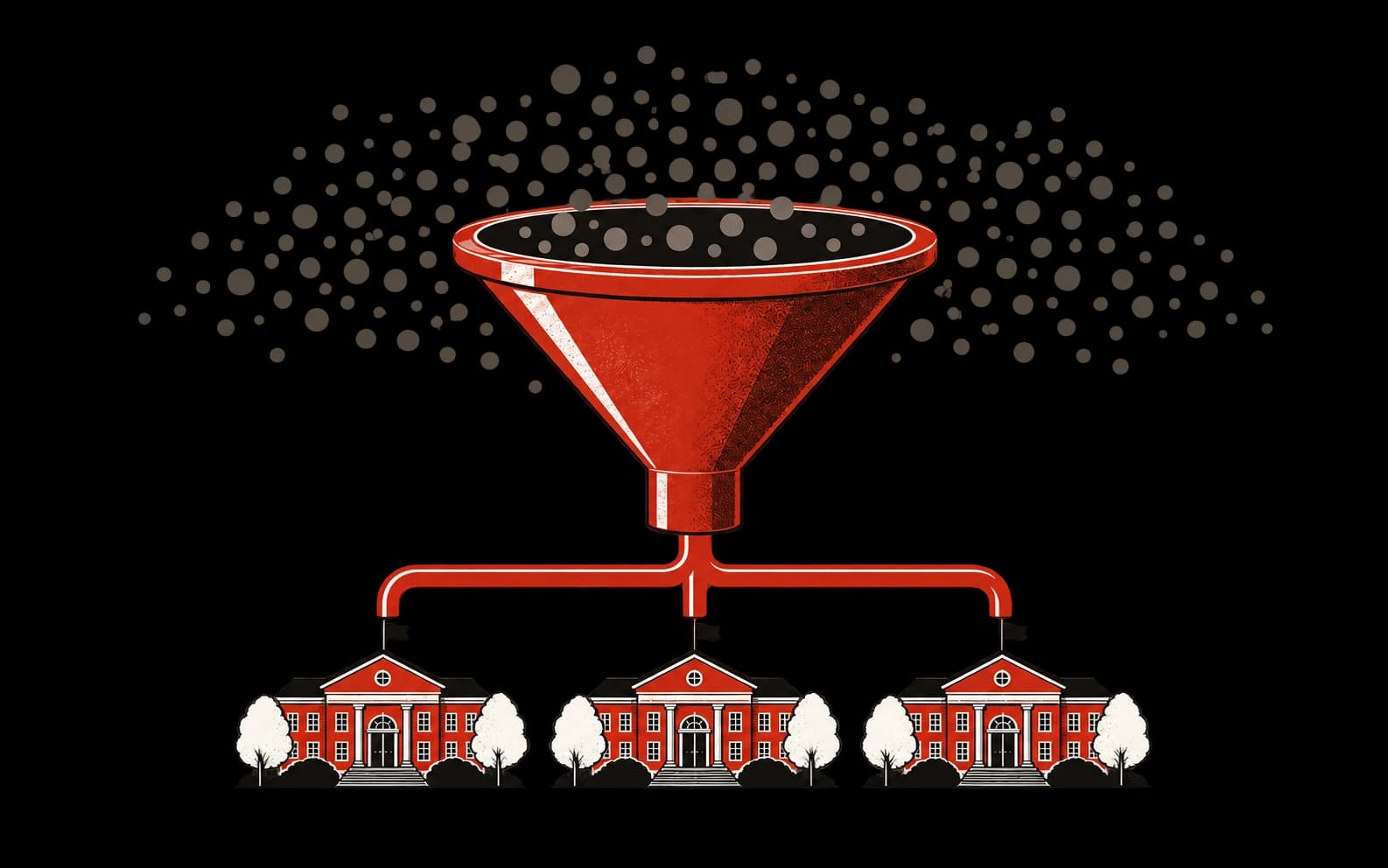
K-12 lead generation works best as a funnel:
| Funnel Stage | What You Need | Common Mistake |
|---|---|---|
| Universe | Schools and districts that could buy | Treating every district as equal |
| Fit list | Accounts matching your ICP | Filtering only by state and size |
| Signal list | Accounts with current timing | Waiting until RFP publication |
| Contact list | The right role and verified route | Emailing only superintendents |
| Nurture list | Accounts worth staying close to | Giving up after one cold email |
| Sales-ready list | Fit plus signal plus buyer access | Calling too late in the cycle |
The conversion point is not the first download or reply. In K-12, the real conversion point is a district entering an active buying window while you are already known.
Content That Pulls K-12 Leads In
Useful K-12 lead magnets answer the questions vendors are already typing into Google:
- How do I find K-12 leads?
- How do I sell to school districts?
- How do I find school district decision-makers?
- What are K-12 buying signals?
- When do school districts buy?
- How do school district budgets work?
- What grants can pay for my EdTech product?
- How do I make my website more credible to K-12 buyers?
Each of those questions should map to a specific page, not a generic blog archive.
Bellwork already has guides on buying signals, budgets, grants, RFPs, and procurement timing. This page sits one step earlier: how to turn those signals into a steady K-12 lead-generation system.
The Three Kinds of K-12 Leads
Not every K-12 lead should be handled the same way.
1. Data Leads
These come from directories, databases, purchased lists, state files, and contact providers.
They are useful for coverage, but they are not automatically qualified. A superintendent email in a district that has no budget, no category pain, and no active initiative is just a row.
2. Signal Leads
These come from events:
- New superintendent.
- AI policy adoption.
- Board discussion.
- RFP release.
- Grant award.
- Strategic plan update.
- Contract renewal.
- Vendor displacement opportunity.
Signal leads are more valuable because they give your outreach a reason.
3. Relationship Leads
These are accounts that may not be ready now, but are worth developing because fit is high.
In K-12, relationship leads matter because the buying window can be six to twelve months away. The seller who educates, helps, and follows district priorities before the RFP is usually in a better position than the seller who appears after the RFP drops.
A Simple K-12 Lead Generation System
Use this weekly workflow:
- Pick one segment: state, category, district size, or buyer role.
- Build a list of 100-300 matching accounts.
- Add contacts for the buyer roles that matter.
- Score each account for timing signals.
- Split into three buckets: reach now, nurture, monitor.
- Write outreach around the signal, not around your product.
- Review new signals every week.
That is the system most teams are missing. They are not short on possible leads. They are short on prioritization.
Where AI Fits
AI can make K-12 lead generation faster when it does three jobs:
- Summarize district context.
- Score accounts against your ICP.
- Draft outreach from real signals.
AI should not invent the lead list. It should operate on a real list. See How to Find K-12 Leads with AI for the workflow.
What to Measure
Measure more than email opens.
Useful K-12 lead-generation metrics include:
- Accounts with known buyer roles.
- Accounts with at least one active signal.
- Accounts in the right procurement window.
- First meetings booked from signal-based outreach.
- Nurture accounts that become active within 90-180 days.
- RFPs where you were in conversation before publication.
Those metrics tell you whether your lead system is actually learning the K-12 market.
How Bellwork Helps
Bellwork combines school and district data, contacts, buying signals, and AI-ready workflows in one place. Instead of buying a static list, you can search the K-12 market, filter by fit, see why a district might be ready, and reach the right buyer with context.